

Building a Winning Cybersecurity Strategy


.png)
External Speakers

Ben Lovely

Key Strategic Takeaways
AI is accelerating both cyber threats and defence, but the foundations of a strong cybersecurity strategy remain the same. Organisations should prioritise visibility, resilience, continuous validation, and faster incident response while adapting to AI-driven risks.
The biggest risk isn't just AI-powered attackers—it's a lack of visibility into AI agents. Organisations need to understand what AI systems can access, how they behave, and whether they're operating within defined guardrails.
AI agents should be treated like employees. Before deployment, define their role, responsibilities, permissions, and acceptable behaviour to ensure they operate securely and only access the systems they need.
Cybersecurity leaders should report AI risk in business terms. Rather than relying solely on technical metrics, they should demonstrate financial impact, operational resilience, and measurable security outcomes that align with business objectives.
Common mistakes include deploying AI without understanding data risks, relying on governance without enforcing technical controls, and focusing on tools instead of visibility, orchestration, and actionable insights.
• 00:00 Introduction & Welcome
• 00:40 Why AI Is Reshaping Cybersecurity Strategy
• 01:39 What a Strong Cybersecurity Strategy Looks Like in the Age of AI
• 03:00 AI Adoption, Legacy Infrastructure & Board Expectations
• 05:20 The Biggest AI Security Risk: Visibility, Not Just Threat Actors
• 07:10 Managing Data Effectively in the AI Era
• 08:25 Which Parts of Cybersecurity Strategy Need to Change?
• 10:00 Treat AI Agents Like Employees
• 11:20 Modernising Security Architecture for AI
• 12:35 Reporting Cyber Risk to Boards & Executives
• 16:10 Common AI Security Mistakes Organisations Make
• 17:50 Data Governance, AI & Protecting Sensitive Information
• 19:35 Final Takeaways: Orchestration Over Tool Consolidation
• 20:17 Closing Remarks
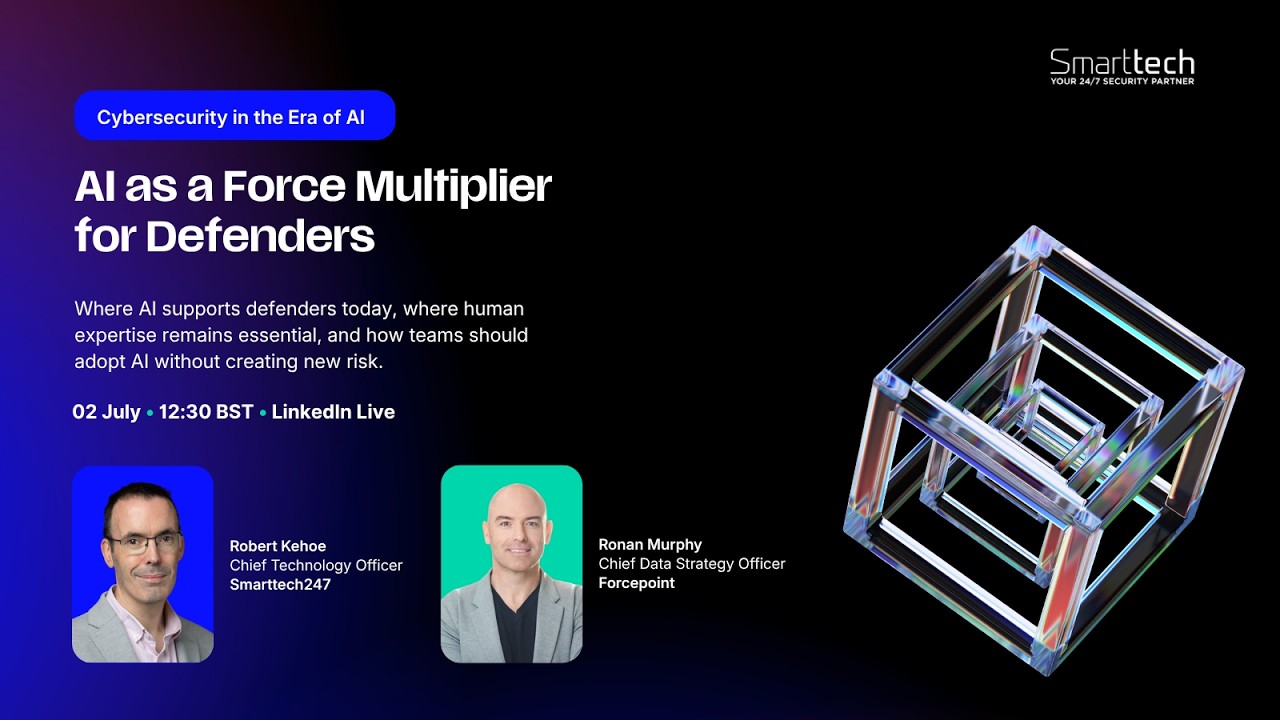
AI as a Force Multiplier for Defenders

Ready to scale your security and compliance operations?
We protect your on-premise/cloud/OT environments - 24x7x365