.png)
Citrix NetScaler flaws face mass exploitation within a day of disclosure, Cisco's SD-WAN scores its eighth CVE of the year, and Revolut is breached again via a third-party supplier.

MDR

Solutions
Partners
About
Resources

.svg)
Why Strong Operational Design is Critical for Microsoft Security Performance
Published:
July 20, 2026
If your Microsoft environment still feels difficult to operate, that is worth examining. Because in most cases, it is not a product problem.
Most organisations we speak with already have substantial capability deployed. Defender, Sentinel, Entra -- the investment is real and the licences are active. The more useful question is whether that capability has been organised to support better investigation, better prioritisation, and better decision-making.
The Operational Gap Most Teams Don't Talk About
Having Microsoft tools is not the same as having them work together. Most environments with Defender, Sentinel, and Entra still don't have normalised correlation across all three, automated enrichment on incoming alerts, or a single place where investigation and response happen. The tools are technically deployed. The operational layer that connects them often isn't.
The environments that perform most effectively are deliberate about how they use their telemetry. Investigation, triage, escalation, and response are not handled as separate activities across disconnected portals. They run as a connected workflow, with all data inputs feeding a single operational picture. That design is what allows teams to move at the speed modern threats require.
What Leadership Loses When Operations are Fragmented
This affects more than your analysts. When operations aren't built around a coherent model, it becomes genuinely hard for leadership to answer basic questions: how is the environment performing over time? Where is risk concentrating? What has actually improved?
Security reporting ends up describing activity rather than performance. And without a clear operational picture, security spend looks like a cost with no measurable return: a difficult conversation to have with a board that is increasingly asking CISOs to demonstrate that their security programme operates intelligently, not just continuously.
The Difference That Matters
There is a real distinction between a technically deployed Microsoft environment and a Microsoft environment with operational maturity. Getting there doesn't require replacing what you have. It requires rethinking how what you have is used, and putting the right operational layer on top of it.
That is what we work on with organisations through VisionX MDR for Microsoft. We run Defender, Sentinel, and Entra as a single operational system: 24/7, with AI-powered investigation, automated response via pre-approved SOAR playbooks, and certified Microsoft analysts who act, not just alert. Every investigation and response action is visible in real time through VisionX, so leadership has the performance data they need without chasing it.
Read Our Latest Blogs
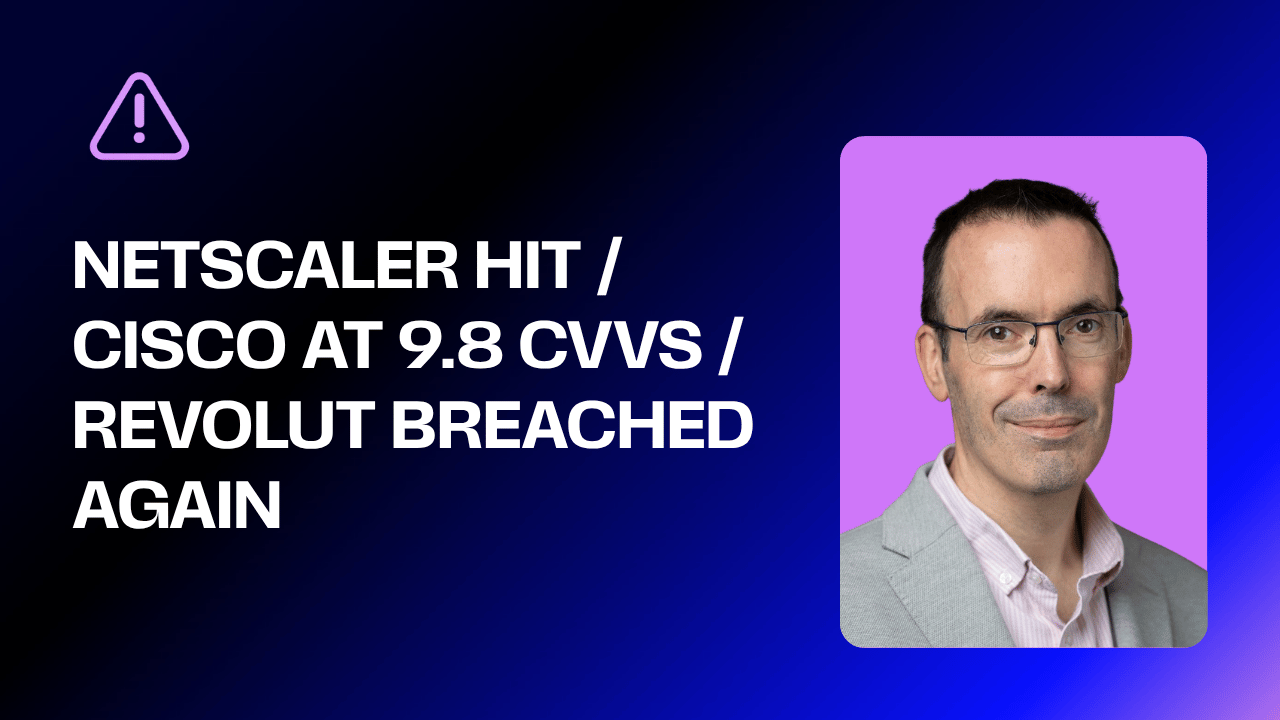
Citrix NetScaler Mass Exploitation, Cisco's 9.8 CVE & Revolut Breached Again
.png)
6 best MDR and XDR platforms for MSSPs in 2026
Compare six MDR and XDR platforms for MSSPs on multi-tenancy, compliance mapping and response speed, from CrowdStrike to Smarttech247 VisionX.

Microsoft Emergency Patch, Revolut Breach & Cisco's Second Perfect 10 CVSS
Microsoft rushes an emergency patch after last week's update broke Remote Desktop and hypervisor stability, Revolut discloses a process breach affecting 680+ high-net-worth clients, and Cisco scores another perfect 10 CVSS.