


Smarttech247 MDR for Retail and Ecommerce
24/7
<15m
PCI-DSS
GDPR
Peak Season Amplifies Every Risk
.svg)
POS and payment skimming

Ransomware targeting operations

Data breach & PCI-DSS exposure
Go Deeper.
Read Smarttech247 Research into MDR for Retail


MDR for the largest automotive retailer in the US
Fortune 150. $20B+ annual revenue. See how AutoNation extended its MDR engagement after a successful initial deployment.
Read case study

.png)
Insights on Effective Incident Response from NCIS and AutoNation
.jpg)
Smarttech247 MDR and SOC Capability
MDR for Email & Identity
Threat Intelligence
Compliance & PCI-DSS
Rapidly Respond to Threats with VisionX
Intelligent Phishing Response for Retail
Explore Our Retail Resources

AI in Cybersecurity for Retail
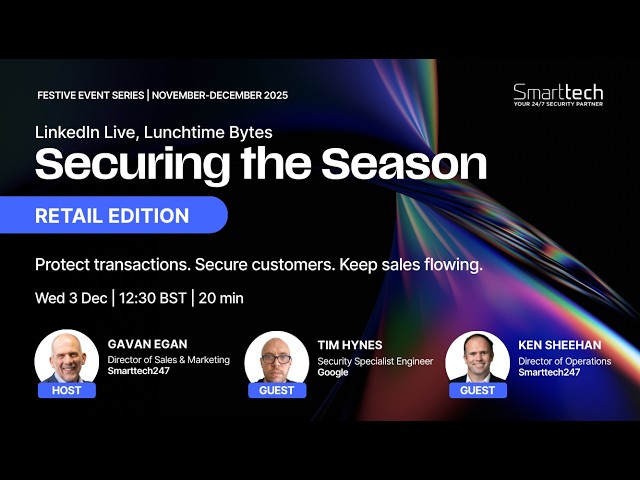
Seasonal Cybersecurity Risks for Retail
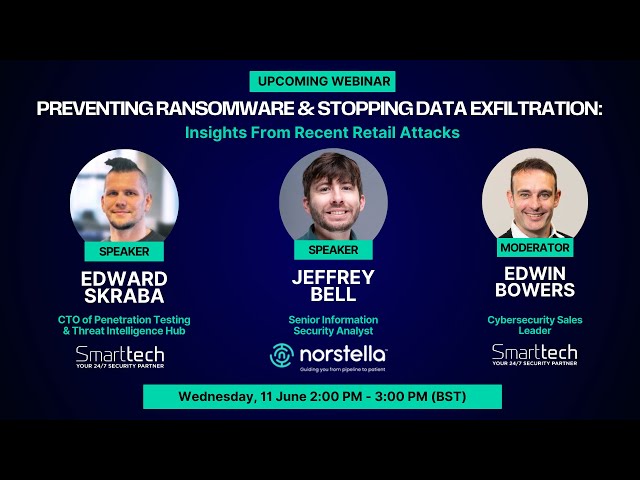
Seasonal Cybersecurity Risks for Retail
Common Questions About
Securing Retail and Ecommerce
Does Resilience Depend on Preparation and Not Just Prevention?
Organisations that respond effectively are those that have tested incident response plans, defined escalation paths, and rehearsed real-world scenarios through tabletop exercises. Security cannot rely on prevention alone given the speed and sophistication of attacks. Building resilience means combining proactive controls with continuous testing, cross-functional readiness, and the ability to contain incidents quickly.
Is Ransomware Now a Scalable, Service-Based Business?
Ransomware groups operate as organised ecosystems, with affiliates, access brokers, and platform providers working together to maximise reach and profitability. This model allows attackers to quickly adapt and continue operations even when specific groups are disrupted. Defence strategies must account for this scale by strengthening early detection, limiting lateral movement, and disrupting attack chains before encryption or exfiltration occurs.
Do Attackers Blend In by Using Legitimate Tools and Access?
Once inside, attackers avoid detection by using trusted tools, built-in system binaries, and legitimate cloud services to move laterally and escalate privileges. This “living off the land” approach makes malicious activity appear normal in logs. Detection must focus on behavioural anomalies and misuse of legitimate access rather than relying solely on known malware signatures.
Does Initial Access Happen Earlier Than Most Organisations Realise?
Attackers commonly gain access through phishing, credential reuse, infostealers, and exploited applications, often long before any visible attack occurs. Many environments are already compromised at the identity level without detection. Reducing risk requires continuous monitoring of credentials, enforcing strong identity controls, and assuming compromise rather than waiting for obvious indicators.
Has Ransomware Evolved Into Data Extortion?
Modern ransomware is no longer just about encrypting systems, it’s about stealing sensitive data first and using it as leverage for double extortion. Even with strong backups, organisations remain exposed to regulatory fines, reputational damage, and public data leaks. Preventing ransomware now means protecting data from exfiltration, not just ensuring recovery from encryption.
Ready to talk to our retail security team?
No obligation — 30-minute briefing on your threat exposure