

Empowering Forcepoint Customers with Comprehensive Managed DLP Solutions Webinar


.png)
External Speakers

Jaimen Hoopes
.png)
Key Strategic Takeaways
Ransomware has evolved into data extortion, while cloud adoption and remote work have pushed sensitive data beyond traditional controls. At the same time, data creation is accelerating, increasing both value and exposure across organisations. Modern data protection must account for where data actually lives and moves, not where organisations assume it resides.
The most common data loss scenarios involve employees sending data to personal email or leaving with sensitive information, often without malicious intent. These behaviours reflect gaps in governance and ownership rather than deliberate abuse. Reducing insider risk requires visibility, clear ownership, and controls aligned with real user behaviour rather than rigid policy enforcement.
Many organisations deploy DLP without first understanding what data they have, where it is stored, or how it is accessed. This leads to ineffective policies, high false positives, and limited impact. A successful approach starts with data discovery, classification, and risk assessment, enabling DLP to enforce meaningful, context-aware controls.
Data security cannot operate in isolation, DLP events must be integrated into SOC workflows to correlate user behaviour, network activity, and threat intelligence. Automation helps reduce false positives, prioritise real threats, and accelerate response through orchestrated actions. This shifts DLP from passive monitoring to an active component of incident detection and response.
Effective data security requires ongoing tuning, monitoring, and adaptation as environments and risks evolve. Managed DLP services help organisations operationalise controls, reduce complexity, and achieve faster time-to-value, particularly where internal resources are limited. Treating DLP as a programme, not a product, is what enables sustained protection against both insider and external threats.
- 00:01 Introduction to the webinar on data security and data loss prevention
- 02:22 Current data security landscape: ransomware, supply chain risk, and data growth
- 05:06 Insider risk, departing employees, and personal email as a key data loss channel
- 08:53 Why data security has become fragmented and harder to govern
- 12:53 Why DLP alone is not enough and how managed services improve outcomes
- 15:49 Compliance is shifting from box-ticking to real security enforcement
- 17:50 How customers can maximize DLP investments through simplicity and policy discipline
- 22:08 Why automation and SOC integration are now essential for data security
- 27:03 Breach scenario walkthrough: credential theft, lateral movement, and data exfiltration
- 33:22 Customer example: combining MDR, governance, discovery, classification, and DLP
- 35:48 What is next for Forcepoint: AI, discovery, risk reduction, and next-gen endpoint
- 42:34 What is next for Smarttech247: VisionX, private AI, attack surface management, and integrations
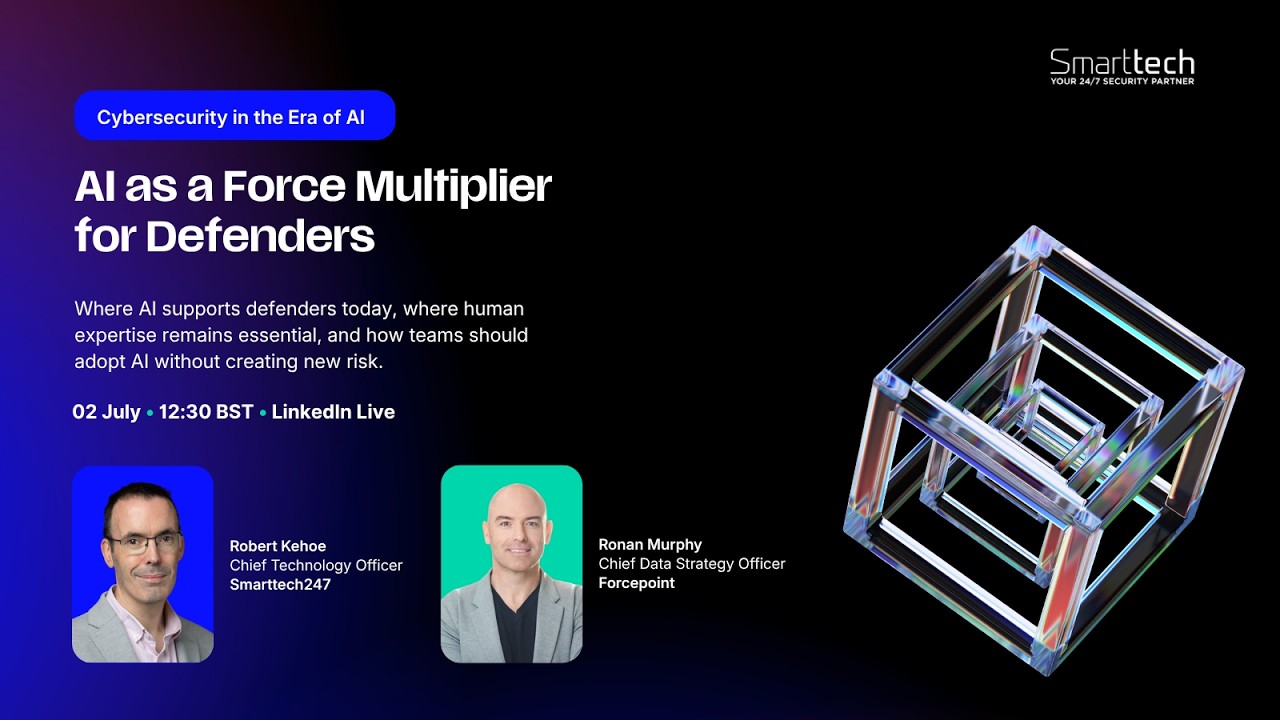
AI as a Force Multiplier for Defenders
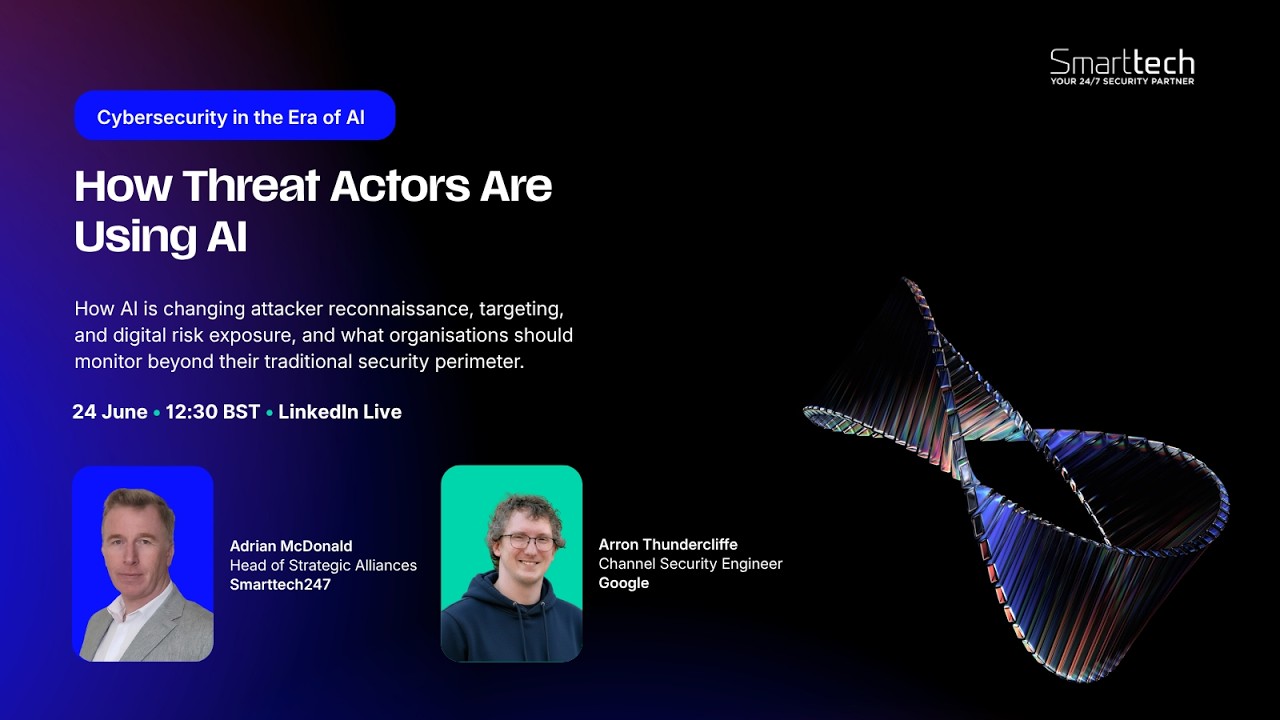
How Threat Actors Are Using AI
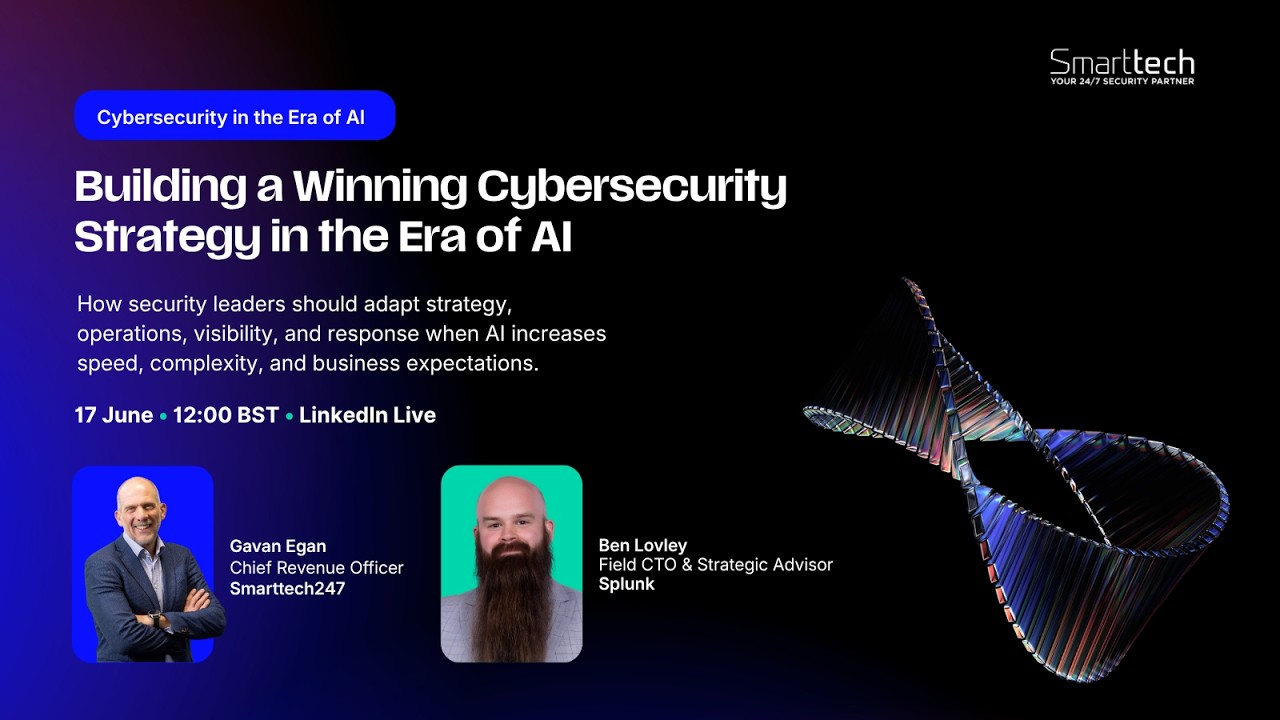
Building a Winning Cybersecurity Strategy
Ready to scale your security and compliance operations?
We protect your on-premise/cloud/OT environments - 24x7x365